More than 91% of U.S. adults, about 242 million people, have a driver’s license. As more Americans drive into their senior years, many wonder if the rules change with age. The answer depends on where in which state you live.
Some states have special renewal rules for older drivers, while others follow the same process for everyone. Knowing your state’s requirements can help you renew your license without surprises.
- Key Takeaways
- Do Seniors Have Different Driving License Rules in the United States?
- Why Do States Have Special Driving Rules for Seniors?
- U.S. Driving License Rules for Seniors by State
- Alabama
- Alaska
- Arizona
- Arkansas
- California
- Colorado
- Connecticut
- Delaware
- Florida
- Georgia
- Hawaii
- Idaho
- Illinois
- Indiana
- Iowa
- Kansas
- Kentucky
- Louisiana
- Maine
- Maryland
- Massachusetts
- Michigan
- Minnesota
- Mississippi
- Missouri
- Montana
- Nebraska
- Nevada
- New Hampshire
- New Jersey
- New Mexico
- New York
- North Carolina
- North Dakota
- Ohio
- Oklahoma
- Oregon
- Pennsylvania
- Rhode Island
- South Carolina
- South Dakota
- Tennessee
- Texas
- Utah
- Vermont
- Virginia
- Washington
- West Virginia
- Wisconsin
- Wyoming
- States That Require Vision Tests for Senior Drivers
- States That Require In-Person License Renewal
- States That May Require a Driving Test
- License Renewal Rules by Age
- Medical Conditions That May Affect a Senior Driver’s License
- Can a Doctor Report an Unsafe Senior Driver?
- Warning Signs That It May Be Time to Stop Driving
- How Seniors Can Renew Their Driver’s License Successfully
- Tips to Stay Safe Behind the Wheel
- Best Vehicle Safety Features for Senior Drivers
- Alternatives if Driving Is No Longer Safe
- Frequently Asked Questions
- Do seniors have to renew their driver’s license more often?
- At what age do seniors need to renew their license?
- Which states require a vision test for senior drivers?
- Do seniors have to take a driving test?
- Can a doctor report an unsafe elderly driver?
- Can family members report an unsafe driver?
- Does turning 70 automatically affect my driver’s license?
- Can seniors renew a driver’s license online?
- Which state has the strictest senior driving laws?
- Conclusion
Key Takeaways
- The U.S. has no single federal driving law for senior drivers.
- Each state sets its own license renewal rules for older adults.
- Some states require seniors to renew their licenses more often.
- Vision tests are required in many states, but not in all.
- Certain states require older drivers to renew their licenses in person.
- A road test or knowledge test may be required if the DMV has concerns.
- Health problems, vision loss, or some medical conditions may affect renewal.
- Always check your state DMV website before starting the renewal process.
Do Seniors Have Different Driving License Rules in the United States?
Yes, senior driving license rules can be different, but they depend on the state where you live. The United States does not have one federal law for senior driver license renewals. Instead, each state creates its own rules through its Department of Motor Vehicles (DMV).
Age alone does not take away your driver’s license. However, the DMV may require extra steps, such as a vision test or an in-person renewal, to make sure you can still drive safely.
Why Do States Have Special Driving Rules for Seniors?
States use special rules to keep older drivers and other road users safe. Aging can affect vision, hearing, and reaction time. Health problems or some medicines may also make driving harder. These changes do not mean every senior is unsafe. However, vision checks, medical reviews, and shorter renewal periods can help the DMV find risks early while allowing safe seniors to keep driving.
U.S. Driving License Rules for Seniors by State
Senior driving license rules are not the same across the United States. Every state sets its own renewal age, renewal period, and testing requirements. Some states ask older drivers to take a vision test, while others may require an in-person renewal or a road test in certain cases. The table below gives a quick overview of senior driver’s license renewal rules by state.
| State | Renewal Age | Renewal Period | Vision Test | Road Test | In-Person Renewal |
| Alabama | — | Every 4 years | No | No | No |
| Alaska | 69+ | Every 5 years | Yes | If required | Yes |
| Arizona | 65+ | Every 5 years | Yes | If required | Yes |
| Arkansas | — | Every 8 years | No | If required | No |
| California | 70+ | Every 5 years | Yes | If required | Yes |
| Colorado | 66+ | Every 5 years | Yes | If required | No |
| Connecticut | 65+ | Every 2 years (optional) | Yes | If required | No |
| Delaware | 65+ | Every 5 years | Yes | If required | Yes |
| Florida | 80+ | Every 6 years | Yes | No | No |
| Georgia | 64+ | Every 8 years | Yes | If required | No |
| Hawaii | 72+ | Every 2 years | Yes | If required | Yes |
| Idaho | 63+ | Every 4 years | Yes | If required | Yes |
| Illinois | 75+ | 2–4 years (age-based) | Yes | Yes (75+) | Yes |
| Indiana | 75+ | 3 years | Yes | If required | Yes |
| Iowa | 70+ | 2 years | Yes | If required | Yes |
| Kansas | 65+ | Every 4 years | Yes | If required | Yes |
| Kentucky | — | Every 8 years | No | If required | No |
| Louisiana | 70+ | Every 6 years | Yes | If required | No |
| Maine | 65+ | Every 4 years | Yes | If required | Yes |
| Maryland | 40+ | Every 8 years | Vision screening | If required | No |
| Massachusetts | 75+ | Every 5 years | Yes | No | Yes |
| Michigan | — | Every 4 years | No | If required | No |
| Minnesota | — | Every 4 years | No | If required | No |
| Mississippi | 71+ | Every 4 years | Yes | If required | Yes |
| Missouri | 70+ | Every 3 years | Yes | If required | Yes |
| Montana | 75+ | Every 4 years | Yes | If required | Yes |
| Nebraska | 72+ | Every 5 years | Yes | If required | Yes |
| Nevada | 71+ | Every 4 years | Yes | If required | Yes |
| New Hampshire | — | Every 5 years | No | If required | No |
| New Jersey | — | Every 4 years | No | If required | No |
| New Mexico | 79+ | Every 1 year | Yes | If required | Yes |
| New York | — | Every 8 years | No | If required | No |
| North Carolina | 66+ | Every 5 years | Yes | If required | Yes |
| North Dakota | 78+ | Every 4 years | Yes | If required | Yes |
| Ohio | — | Every 4 years | No | If required | No |
| Oklahoma | — | Every 4 years | No | If required | No |
| Oregon | 50+ | Every 8 years | Yes | If required | Yes |
| Pennsylvania | 65+ | 2 years (optional) | No | If required | No |
| Rhode Island | 75+ | Every 2 years | Yes | If required | Yes |
| South Carolina | 65+ | Every 5 years | Yes | If required | Yes |
| South Dakota | 65+ | Every 5 years | Yes | If required | Yes |
| Tennessee | — | Every 8 years | No | If required | No |
| Texas | 79+ | 2–6 years (age-based) | Yes | If required | Yes |
| Utah | 65+ | Every 5 years | Yes | No | No |
| Vermont | — | Every 4 years | No | If required | No |
| Virginia | 75+ | Every 5 years | Yes | If required | Yes |
| Washington | — | Every 6 years | Vision if needed | If required | No |
| West Virginia | 70+ | Every 5 years | Yes | If required | Yes |
| Wisconsin | — | Every 8 years | No | If required | No |
| Wyoming | — | Every 8 years | No | If required | No |
Note: License renewal rules can change over time. Always check your state’s DMV website for the latest renewal requirements before renewing your driver’s license.
Alabama
- Renewal period: Every four years for all drivers.
- Vision test: Not required at renewal.
- Knowledge test: Not normally required because of age alone.
- Road test: Not normally required unless the licensing agency orders a review.
- Special rules: Alabama has no separate renewal cycle for senior drivers. Online renewal may be available every other renewal.
Alaska
- Renewal period: Every five years for all drivers.
- Vision test: Drivers aged 69 and older must pass one at every renewal.
- Knowledge test: Not routinely required because of age alone.
- Road test: May be required when officials have concerns about driving ability.
- Special rules: Drivers aged 69 and older cannot use remote renewal.
Arizona
- Renewal period: Drivers aged 60 and older renew every five years. The general renewal cycle can last up to 12 years.
- Vision test: Required at every renewal.
- Knowledge test: Not normally required for age alone.
- Road test: Only required when the state orders further testing.
- Special rules: Arizona does not offer mail or online renewal under the rules listed by IIHS.
Arkansas
- Renewal period: Drivers aged 70 and older may choose a four-year or eight-year license.
- Vision test: Required every other renewal.
- Knowledge test: Not routinely required for senior drivers.
- Road test: May be ordered if officials question a driver’s safety.
- Special rules: Renewal must follow the state’s standard in-person process.
California
- Renewal period: Every five years for all drivers.
- Vision test: Drivers aged 70 and older must pass one at every renewal.
- Knowledge test: Most drivers aged 70 and older no longer take a routine knowledge test. However, the DMV may still require one in certain cases.
- Road test: Not required for age alone, but the DMV may order one after a safety review.
- Special rules: Drivers aged 70 and older must generally renew in person. California ended its routine written-test rule for most older renewal applicants in October 2024.
Colorado
- Renewal period: Every five years for all drivers.
- Vision test: Required at every renewal.
- Knowledge test: Not routinely required because of age.
- Road test: May be required after a medical or driving review.
- Special rules: Mail or online renewal may be available when the driver’s photo meets state limits.
Connecticut
- Renewal period: The standard term is eight years. Drivers aged 65 and older may choose a two-year license.
- Vision test: Not routinely required at renewal.
- Knowledge test: Not required because of age alone.
- Road test: May be ordered when officials have safety concerns.
- Special rules: Eligible drivers may renew remotely every other cycle.
Delaware
- Renewal period: Every eight years for all drivers.
- Vision test: Required at every renewal.
- Knowledge test: Not normally required for senior drivers.
- Road test: Only required when the licensing agency orders one.
- Special rules: Delaware does not have a shorter age-based renewal cycle.
Florida
- Renewal period: Drivers aged 80 and older renew every six years. Other drivers generally receive an eight-year license.
- Vision test: Required at every renewal after age 80.
- Knowledge test: Not routinely required based only on age.
- Road test: May be ordered if the state has concerns about safe driving.
- Special rules: Eligible older drivers may renew remotely every other renewal.
Georgia
- Renewal period: Every eight years for all drivers.
- Vision test: Required at every renewal.
- Knowledge test: Not normally required because of age.
- Road test: May be required after a safety or medical review.
- Special rules: Eligible drivers can use mail or online renewal every other cycle.
Hawaii
- Renewal period: Drivers aged 72 to 79 renew every four years. Drivers aged 80 and older renew every two years.
- Vision test: Required at every renewal.
- Knowledge test: Not routinely required for age alone.
- Road test: May be ordered when driving ability is in question.
- Special rules: Remote renewal may be allowed for limited cycles, but drivers must appear in person at least once every 16 years.
Idaho
- Renewal period: Drivers aged 63 and older receive a four-year license.
- Vision test: Required at every renewal.
- Knowledge test: Not normally required based only on age.
- Road test: May be required after a DMV review.
- Special rules: Mail renewal is not available to drivers aged 70 and older.
Illinois
- Renewal period: Drivers aged 81 to 86 renew every two years. Drivers aged 87 and older renew each year. Rules for drivers aged 69 to 80 are scheduled to change in July 2027.
- Vision test: Required at every renewal for drivers aged 79 and older.
- Knowledge test: Not routinely required solely because of age.
- Road test: From July 1, 2026, routine road tests are no longer required for drivers aged 79 to 86. Drivers aged 87 and older still take an annual road test.
- Special rules: Drivers aged 79 and older must renew in person.
Indiana
- Renewal period: Every three years for drivers aged 75 to 84. Every two years for drivers aged 85 and older.
- Vision test: Required at every renewal after age 75.
- Knowledge test: Not routinely required based only on age.
- Road test: May be ordered after a safety review.
- Special rules: Mail or online renewal may be available every other renewal.
Iowa
- Renewal period: Drivers aged 78 and older renew every two years.
- Vision test: Required at every renewal from age 70.
- Knowledge test: Not normally required because of age alone.
- Road test: May be ordered when officials have concerns.
- Special rules: Drivers aged 70 and older cannot renew online under the listed rules.
Kansas
- Renewal period: Drivers aged 65 and older renew every four years.
- Vision test: Required at every renewal.
- Knowledge test: Not routinely required for senior drivers.
- Road test: May be ordered after a medical or safety review.
- Special rules: Drivers aged 65 and older must renew in person.
Kentucky
- Renewal period: Drivers may choose a four-year or eight-year license.
- Vision test: Required at every renewal.
- Knowledge test: Not required because of age alone.
- Road test: May be ordered when driving ability is questioned.
- Special rules: Kentucky has no separate senior renewal period. Remote renewal may depend on the age of the driver’s stored photo.
Louisiana
- Renewal period: Every six years for all drivers.
- Vision test: Required at each renewal for drivers aged 70 and older.
- Knowledge test: Not routinely required solely because of age.
- Road test: May be required after a state review.
- Special rules: Drivers aged 70 and older generally renew in person. A limited medical exception may allow remote renewal.
Maine
- Renewal period: Drivers aged 65 and older must renew their licenses every four years.
- Vision test: Required at every renewal from age 62.
- Knowledge test: Not normally required based only on age.
- Road test: May be ordered if officials have safety concerns.
- Special rules: Drivers aged 62 and older generally cannot renew remotely.
Maryland
- Renewal period: Every eight years for all drivers.
- Vision test: Required at every renewal from age 40.
- Knowledge test: Not routinely required for senior drivers.
- Road test: May be required following a medical or driving review.
- Special rules: Remote renewal may be available when the stored photo is still acceptable.
Massachusetts
- Renewal period: Every five years for all drivers.
- Vision test: Required at every renewal from age 75.
- Knowledge test: Not normally required because of age alone.
- Road test: May be ordered after a safety review.
- Special rules: Drivers aged 75 and older must renew in person.
Michigan
- Renewal period: Every four years for all drivers.
- Vision test: Required when renewing in person.
- Knowledge test: Not routinely required based only on age.
- Road test: May be ordered when the state receives a safety or medical concern.
- Special rules: There is no shorter senior renewal cycle. Eligible drivers may renew remotely every other cycle.
Minnesota
- Renewal period: Every four years for all drivers.
- Vision test: Required at every renewal.
- Knowledge test: Not normally required because of age.
- Road test: A driving test may be requested if a safety evaluation determines it is necessary.
- Special rules: Minnesota keeps the same license renewal period for older drivers and does not shorten it based on age.
Mississippi
- Renewal period: Drivers may choose a four-year or eight-year license.
- Vision test: Not routinely required at renewal.
- Knowledge test: Not required solely because of age.
- Road test: May be ordered if officials question driving fitness.
- Special rules: Mississippi has no special age-based renewal cycle. Online renewal may be available every other term.
Missouri
- Renewal period: Drivers aged 70 and older renew every three years.
- Vision test: Required at every renewal.
- Knowledge test: Not normally required based only on age.
- Road test: May be ordered after a medical or safety review.
- Special rules: Renewal is generally completed through the state licensing office.
Montana
- Renewal period: Drivers aged 75 and older renew every four years.
- Vision test: Required at every renewal.
- Knowledge test: Not routinely required because of age alone.
- Road test: May be required when driving ability is questioned.
- Special rules: Younger drivers may receive a license lasting up to 12 years or until age 75.
Nebraska
- Renewal period: Every five years for all drivers.
- Vision test: Required at every renewal from age 72.
- Knowledge test: Not normally required for age alone.
- Road test: May be ordered following a safety review.
- Special rules: Drivers aged 72 and older cannot renew online.
Nevada
- Renewal period: Drivers aged 65 and older renew every four years.
- Vision test: Required at every renewal from age 71.
- Knowledge test: Not routinely required based only on age.
- Road test: May be ordered if the DMV has safety concerns.
- Special rules: Drivers aged 71 and older may qualify for remote renewal only with reports from a doctor and an eye-care professional.
New Hampshire
- Renewal period: Every five years for all drivers.
- Vision test: Required at every renewal.
- Knowledge test: Not normally required because of age.
- Road test: May be ordered after a medical or safety review.
- Special rules: Online renewal may be available every other cycle.
New Jersey
- Renewal period: Drivers aged 70 and older may choose a two-year or four-year license.
- Vision test: Required at least once every 10 years.
- Knowledge test: Not routinely required based only on age.
- Road test: May be ordered when officials question safe driving ability.
- Special rules: Mail or online renewal may be available unless a new photo is needed.
New Mexico
- Renewal period: Every four years for drivers aged 71 to 78. Every year for drivers aged 79 and older.
- Vision test: Required at every renewal from age 75.
- Knowledge test: Not normally required solely because of age.
- Road test: May be ordered after a safety review.
- Special rules: Drivers aged 75 and older must renew in person.
New York
- Renewal period: All drivers must renew their licenses every eight years.
- Vision test: Required at every renewal.
- Knowledge test: Not routinely required based only on age.
- Road test: May be required if the licensing agency receives safety concerns.
- Special rules: New York has no separate senior renewal cycle. Mail and online renewal may be available.
North Carolina
- Renewal period: Drivers aged 66 and older renew every five years.
- Vision test: Required at every renewal.
- Knowledge test: Not normally required because of age alone.
- Road test: May be ordered after a medical or safety review.
- Special rules: Eligible drivers may renew online every other cycle. Temporary rules also address the state’s renewal backlog through 2027.
North Dakota
- Renewal period: Drivers aged 78 and older renew every four years.
- Vision test: Required at every renewal.
- Knowledge test: A knowledge test is not normally required based only on a driver’s age.
- Road test: May be ordered if officials have concerns.
- Special rules: Drivers aged 70 and older cannot use remote renewal.
Ohio
- Renewal period: Drivers aged 65 and older receive a four-year license.
- Vision test: Required at every renewal from age 65.
- Knowledge test: Drivers are not usually required to take a knowledge test simply because of their age.
- Road test: May be required after a safety review.
- Special rules: Drivers aged 65 and older must renew in person.
Oklahoma
- Renewal period: Drivers may choose a four-year or eight-year license.
- Vision test: Not routinely required at renewal.
- Knowledge test: Not required solely because of age.
- Road test: May be ordered if officials question driving ability.
- Special rules: Oklahoma has no shorter renewal cycle for senior drivers.
Oregon
- Renewal period: Drivers of all ages renew their licenses every eight years.
- Vision test: Drivers aged 50 and older take a vision test when renewing in person.
- Knowledge test: Not normally required based only on age.
- Road test: May be ordered after a medical or safety review.
- Special rules: Eligible drivers can renew online every other cycle.
Pennsylvania
- Renewal period: Drivers aged 65 and older may choose a two-year or four-year license.
- Vision test: Not routinely required at renewal.
- Knowledge test: Not required because of age alone.
- Road test: May be ordered when officials have safety concerns.
- Special rules: Mail and online renewal are available to eligible drivers.
Rhode Island
- Renewal period: Drivers aged 75 and older renew every two years.
- Vision test: Required at every renewal.
- Knowledge test: Not routinely required based only on age.
- Road test: May be required after a safety review.
- Special rules: Online renewal may be available every other cycle.
South Carolina
- Renewal period: Every driver must renew their license once every eight years.
- Vision test: Required at every renewal.
- Knowledge test: A knowledge test is generally not required based solely on a driver’s age.
- Road test: May be ordered if the state questions safe driving ability.
- Special rules: South Carolina has no shorter senior renewal term. Eligible drivers may be able to renew by mail or online.
South Dakota
- Renewal period: Every five years for all drivers.
- Vision test: Required at every renewal from age 65.
- Knowledge test: A knowledge test is generally not required based solely on a driver’s age.
- Road test: May be ordered after a medical or driving review.
- Special rules: Eligible older drivers can complete a remote renewal every other renewal cycle.
Tennessee
- Renewal period: Licenses generally last eight years.
- Vision test: Not routinely required at renewal.
- Knowledge test: Not required based only on age.
- Road test: May be ordered when officials have safety concerns.
- Special rules: Tennessee has no separate age-based renewal cycle. Mail and online renewal may be available.
Texas
- Renewal period: Drivers aged 85 and older renew every two years.
- Vision test: Required at every renewal from age 79.
- Knowledge test: Not routinely required solely because of age.
- Road test: May be ordered following a safety review.
- Special rules: Drivers aged 79 and older must renew in person.
Utah
- Renewal period: All drivers are required to renew their licenses every eight years.
- Vision test: Required at every renewal from age 65.
- Knowledge test: Not normally required based only on age.
- Road test: May be ordered if officials question driving fitness.
- Special rules: Eligible drivers may renew online every other cycle.
Vermont
- Renewal period: Drivers may choose a two-year or four-year license.
- Vision test: Not routinely required at renewal.
- Knowledge test: Not required because of age alone.
- Road test: May be ordered following a safety review.
- Special rules: Vermont requires an updated in-person photo at least once every eight years.
Virginia
- Renewal period: Drivers aged 75 and older renew every five years.
- Vision test: Required at every renewal after age 75.
- Knowledge test: Not routinely required based only on age.
- Road test: May be required after a medical or safety review.
- Special rules: Drivers aged 75 and older must renew in person.
Washington
- Renewal period: Drivers may choose a six-year or eight-year license.
- Vision test: Required at every renewal.
- Knowledge test: Drivers are not usually required to take a knowledge test simply because they are older.
- Road test: May be ordered if officials have safety concerns.
- Special rules: Drivers aged 70 and older cannot use remote renewal.
West Virginia
- Renewal period: Every driver is required to renew their license once every eight years.
- Vision test: Required at every renewal.
- Knowledge test: Not routinely required based only on age.
- Road test: May be ordered following a medical or safety review.
- Special rules: West Virginia has no shorter senior renewal cycle. Online renewal may be available every other term.
Wisconsin
- Renewal period: Every licensed driver renews their driver’s license every eight years.
- Vision test: Required at every renewal.
- Knowledge test: Not normally required because of age alone.
- Road test: May be ordered when safe driving ability is questioned.
- Special rules: Wisconsin has no separate renewal period for older drivers.
Wyoming
- Renewal period: Every five years for all drivers.
- Vision test: Required at every renewal.
- Knowledge test: Not routinely required based only on age.
- Road test: May be required after a safety or medical review.
- Special rules: Eligible drivers may renew by mail every other cycle.
Important: These rules reflect the IIHS summary updated in July 2026. The IIHS warns that its table provides general information and may not include every exception. Readers should confirm current requirements with their state DMV before renewing.
States That Require Vision Tests for Senior Drivers
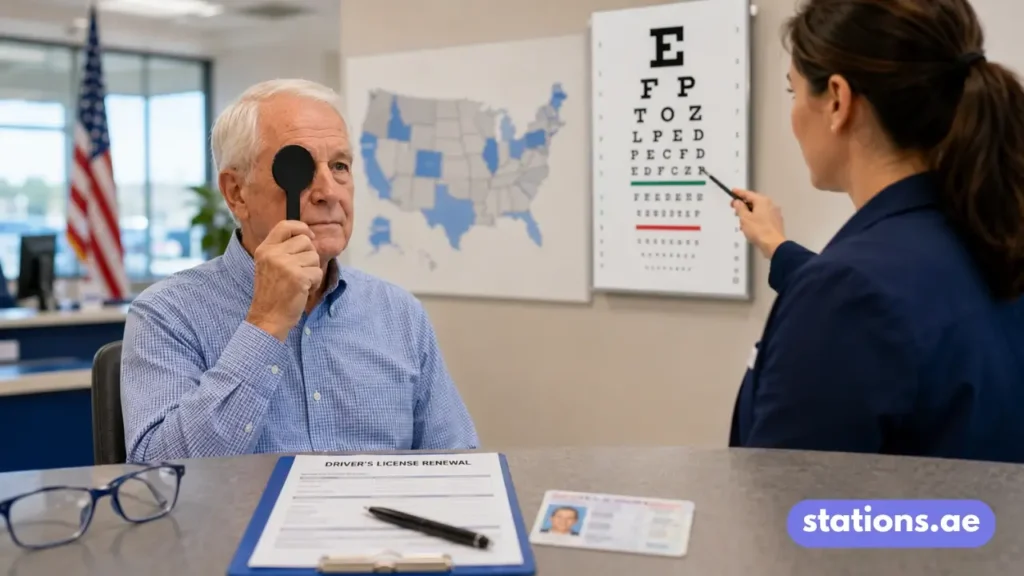
Many states require older drivers to take a vision test when renewing a driver’s license. Good eyesight helps drivers read road signs, judge distance, and notice people, traffic signals, and other vehicles. As people age, eye conditions such as cataracts, glaucoma, and macular degeneration can affect safe driving. Vision tests help the DMV confirm that a driver can still see well enough to drive safely.
Some states require vision tests once drivers reach a certain age. For example, California requires a vision test for drivers aged 70 and older. Florida starts vision testing at age 80, while Texas begins at age 79. States such as Arizona, Colorado, Kansas, New York, Minnesota, Wisconsin, and several others require a vision test at every renewal, regardless of age or during in-person renewals.
The age and renewal rules are different in every state. In some places, seniors must take a vision test every time they renew their license. Other states only require the test if the DMV has concerns about the driver’s eyesight or overall health. Because these rules change over time, always check your state’s DMV website before renewing your license.
You can prepare for a vision test by scheduling an eye exam before your renewal appointment. Wear your glasses or contact lenses if you use them for driving. Bring any required vision forms if your eye doctor completed one. Getting enough rest before the test and updating your prescription can also help you pass the vision screening without problems.
States That Require In-Person License Renewal
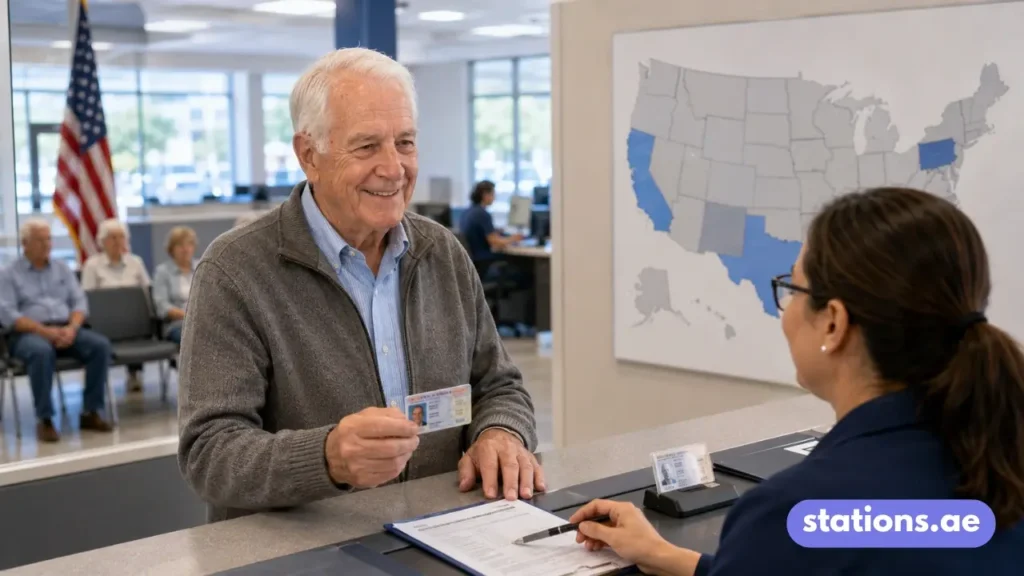
Many states ask older drivers to renew their driver’s license in person after reaching a certain age. This allows DMV staff to confirm the driver’s identity, update the license photo, complete a vision test if needed, and check whether the driver can safely operate a vehicle. In-person renewal also gives the DMV a chance to review any medical concerns that could affect driving.
Several states have age-based in-person renewal rules. For example, California generally requires drivers aged 70 and older to renew in person. Massachusetts starts at age 75, while Virginia also requires in-person renewal for drivers aged 75 and older. Texas, Illinois, New Mexico, Kansas, and a number of other states have similar requirements for older drivers. Other states allow online or mail renewal if the driver meets certain conditions.
Before visiting the DMV, gather the documents you may need. Bring your current driver’s license, proof of identity, proof of residency if required, and payment for the renewal fee. If you wear glasses or contact lenses, bring them for the vision test. Some drivers may also need medical forms or a vision report from an eye doctor if requested by the DMV.
Even if your state allows online renewal, check the latest DMV rules before renewing. Age, medical conditions, or changes in state law may require you to complete the renewal process in person.
States That May Require a Driving Test
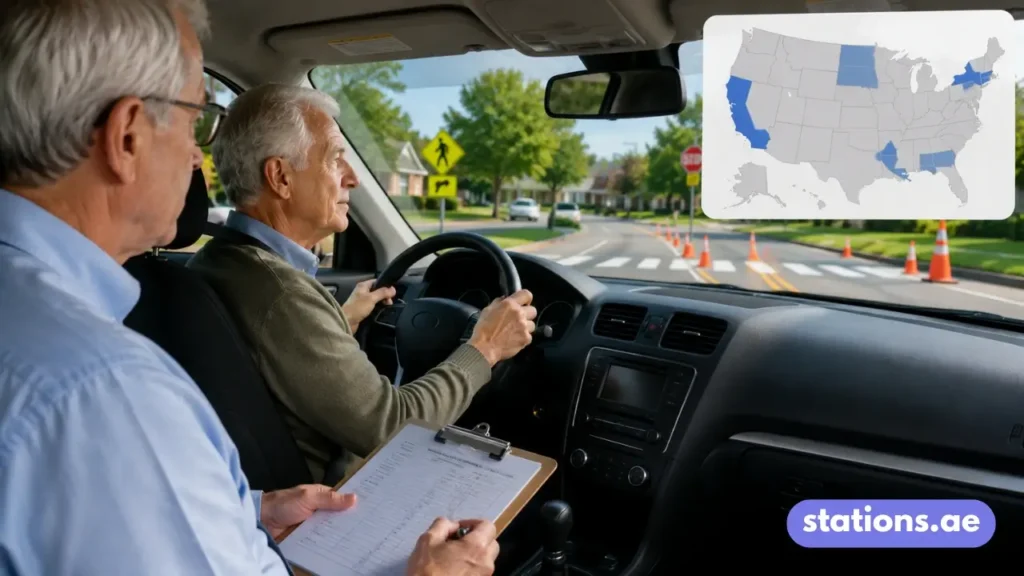
Most seniors do not have to take a driving test just because they reach a certain age. However, some states may require extra testing if the DMV believes a driver may no longer be able to drive safely. The decision usually depends on the driver’s health, vision, or driving record rather than age alone.
A road test checks how well a driver handles real traffic situations. The examiner looks at skills such as turning, changing lanes, stopping, parking, following traffic signs, and driving safely with other vehicles. States like Illinois require some older drivers to complete a road test, while other states only require one after a DMV review.
A written knowledge test is less common for seniors. Some states may ask drivers to take it if they have a poor driving record, have not renewed for many years, or need to show they still understand current traffic laws and road signs.
The DMV also has the authority to require additional testing when there are safety concerns. This may happen after reports from family members, doctors, law enforcement officers, or after repeated traffic violations or crashes. In many states, the DMV reviews each case individually instead of applying the same rule to every senior driver.
A medical review may also be part of the renewal process. If a driver has a condition such as dementia, Parkinson’s disease, epilepsy, or severe vision loss, the DMV may ask for medical records, a doctor’s report, or additional driving tests before deciding whether to renew the license. These reviews help protect both the driver and everyone else on the road.
License Renewal Rules by Age
Many states use age-based renewal rules for older drivers. These rules often change how often a license must be renewed or whether a vision test or in-person visit is required. The age limits are different in every state, so always check your state’s DMV for the latest requirements.
Drivers Age 65+
Many states begin special renewal rules at age 65. Drivers in states such as Arizona, Kansas, Pennsylvania, South Carolina, South Dakota, and Utah may have shorter renewal periods, vision tests, or in-person renewal requirements. However, many other states still follow the same renewal process used for younger adults.
Drivers Age 70+
Several states introduce additional requirements once drivers reach age 70. California, Iowa, Louisiana, Missouri, New Jersey, Washington, and West Virginia have age-based rules that may include vision tests, shorter renewal periods, or in-person renewals. Most drivers can still keep their license if they meet the state’s safety standards.
Drivers Age 75+
At age 75, more states require extra checks during license renewal. Illinois, Indiana, Massachusetts, Montana, Rhode Island, and Virginia have special rules for drivers in this age group. Depending on the state, drivers may need a vision test, a shorter renewal period, or an in-person DMV visit. Some states may also require a road test if there are safety concerns.
Drivers Age 80+
Drivers aged 80 and older often face the strictest renewal requirements. Florida requires a vision test beginning at age 80, while states such as Hawaii and New Mexico shorten the renewal period for many older drivers. These rules help confirm that drivers can continue to drive safely.
Drivers Age 85+
Only a few states have additional rules specifically for drivers aged 85 and older. For example, Texas requires drivers aged 85 and older to renew their license every two years. In some states, the DMV may request medical records, a vision test, or a driving test if there are concerns about a driver’s ability to drive safely. Age alone does not automatically prevent someone from renewing a driver’s license.
Medical Conditions That May Affect a Senior Driver’s License
Having a medical condition does not automatically mean a senior will lose a driver’s license. Many older adults continue to drive safely for years. However, some health conditions can affect vision, memory, movement, or reaction time. If these changes make driving unsafe, the DMV may ask for a medical review before renewing a license. The rules and review process vary from state to state.
Dementia
Dementia can affect memory, judgment, and decision-making. Drivers may forget traffic rules, become confused on familiar roads, or have trouble reacting to traffic. Some states require doctors to report certain cases, while others review drivers only after receiving a medical report or safety concern.
Alzheimer’s Disease
The most common cause of dementia is Alzheimer’s disease. As the condition progresses, it can make driving unsafe. The DMV may request medical records, a doctor’s evaluation, or a driving test before deciding whether a license can be renewed.
Parkinson’s Disease
Parkinson’s disease may cause slow movement, shaking, and poor balance. These symptoms can make it harder to steer, brake, or react quickly. Some drivers may need a medical review or driving evaluation to show they can continue driving safely.
Stroke
A stroke can affect vision, strength, coordination, and thinking skills. Some people recover well and return to driving, while others may need more time or medical approval. The DMV may require a doctor’s statement before renewing the license.
Diabetes
Most people with diabetes can drive safely when their condition is well managed. However, low blood sugar can cause dizziness, blurred vision, or loss of consciousness. Drivers with frequent low blood sugar episodes may need medical clearance before renewing their license.
Epilepsy
Epilepsy can cause seizures that may make driving dangerous. Most states require drivers to be seizure-free for a certain period before they can drive again. A doctor’s report is often needed to confirm the condition is under control.
Vision Disorders
Eye conditions such as cataracts, glaucoma, macular degeneration, and diabetic retinopathy can reduce a driver’s ability to see clearly. Many states require vision tests during license renewal, especially for older drivers. If vision does not meet the state’s minimum standard, the DMV may request treatment, corrective lenses, or additional testing.
Important: Every state has its own DMV rules for medical reviews and license renewals. A condition that requires extra testing in one state may have different requirements in another. Always check your state’s DMV or speak with your doctor if you have questions about driving with a medical condition.
Can a Doctor Report an Unsafe Senior Driver?
Doctors play an important role in helping keep roads safe. If they believe a medical condition makes driving dangerous, they may report the driver to the DMV. However, the reporting rules are not the same across the United States. Some states require doctors to report certain medical conditions, while others leave the decision up to the doctor.
Mandatory Reporting States
A few states require doctors to report drivers with certain medical conditions that could affect safe driving. These medical conditions can include dementia, epilepsy, and other serious health disorders. After receiving a report, the DMV reviews the driver’s case and decides whether more testing is needed.
Voluntary Reporting
In many states, doctors are not required to report unsafe drivers. They may choose to report a patient if they believe the person could be a danger on the road. This decision usually depends on the driver’s medical condition and the state’s reporting laws.
Family Reporting
Family members can also report an unsafe driver in many states. This may happen if they notice signs such as getting lost on familiar roads, missing traffic signs, frequent close calls, or confusion while driving. The DMV reviews each report carefully before taking any action.
Medical Review Process
When the DMV receives a report from a doctor, family member, or law enforcement officer, it may begin a medical review. The driver could be asked to provide medical records, complete a vision test, take a road test, or submit a doctor’s statement. After reviewing the information, the DMV may renew the license, place restrictions on it, request more testing, or suspend driving privileges if the driver is no longer able to drive safely.
Note: Medical reporting laws and DMV review procedures vary by state. Always check your state’s DMV website to learn how medical conditions and driver reports are handled where you live.
Warning Signs That It May Be Time to Stop Drivin
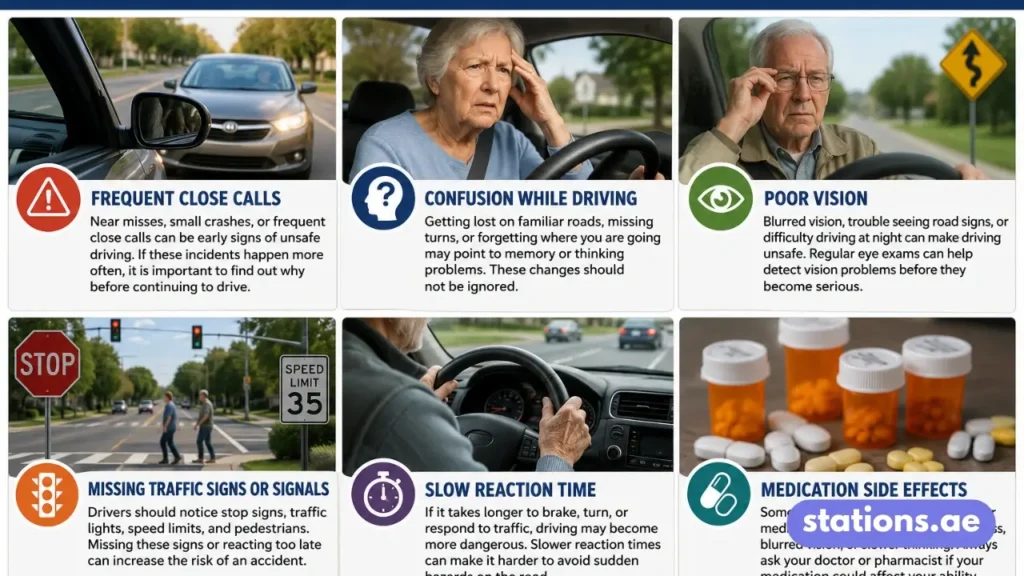
Many seniors continue to drive safely well into their later years. However, changes in health or driving ability can make driving more difficult over time. Watching for early warning signs can help prevent crashes and keep everyone safe. If you notice several of the signs below, it may be time to talk with your doctor or schedule a driving evaluation.
Frequent Close Calls
Near misses, small crashes, or frequent close calls can be early signs of unsafe driving. If these incidents happen more often, it is important to find out why before continuing to drive.
Confusion While Driving
Getting lost on familiar roads, missing turns, or forgetting where you are going may point to memory or thinking problems. These changes should not be ignored.
Poor Vision
Blurred vision, trouble seeing road signs, or difficulty driving at night can make driving unsafe. Regular eye exams can help detect vision problems before they become serious.
Missing Traffic Signs or Signals
Drivers should notice stop signs, traffic lights, speed limits, and pedestrians. Missing these signs or reacting too late can increase the risk of an accident.
Slow Reaction Time
If it takes longer to brake, turn, or respond to traffic, driving may become more dangerous. Slower reaction times can make it harder to avoid sudden hazards on the road.
Medication Side Effects
Some prescription and over-the-counter medicines can cause drowsiness, dizziness, blurred vision, or slower thinking. Always ask your doctor or pharmacist if your medication could affect your ability to drive safely.
Tip: Seeing one warning sign does not always mean you should stop driving. However, if several of these problems happen often, talk with your doctor, family members, or your state’s DMV about the safest next steps.
How Seniors Can Renew Their Driver’s License Successfully
Renewing a driver’s license is usually simple if you prepare in advance. The exact process depends on your state’s DMV, but most seniors follow the same basic steps. Checking the requirements early can save time and help you avoid delays.
Step 1: Check Your State’s DMV Requirements
Visit your state’s DMV website to learn the latest renewal rules. Find out if you can renew online, by mail, or if you must visit a DMV office. Be sure to confirm if a vision test or additional documents are required.
Step 2: Schedule a DMV Appointment
If your state requires an in-person renewal, book your appointment as early as possible. This can help you avoid long wait times, especially during busy periods.
Step 3: Bring the Required Documents
Take your current driver’s license, proof of identity, and any other documents your state requires. If the DMV asked for a medical or vision report, bring those forms with you.
Step 4: Complete the Vision Screening
Many states require older drivers to pass a vision test during renewal. Wear your glasses or contact lenses if you use them while driving.
Step 5: Take Any Required Tests
Some drivers may need a written knowledge test, road test, or medical evaluation. Most seniors do not need these tests unless required by their state’s DMV or after a safety review.
Step 6: Pay the Renewal Fee
Pay the renewal fee using one of the payment methods accepted by your state’s DMV. The cost varies by state and license type.
Step 7: Receive Your New License
Once you complete the renewal process, the DMV will issue your new driver’s license. Some states provide a temporary paper license while your permanent card is mailed to your home.
Tip: Start the renewal process a few weeks before your license expires. This gives you enough time to complete any required tests or provide additional documents if needed.
Tips to Stay Safe Behind the Wheel
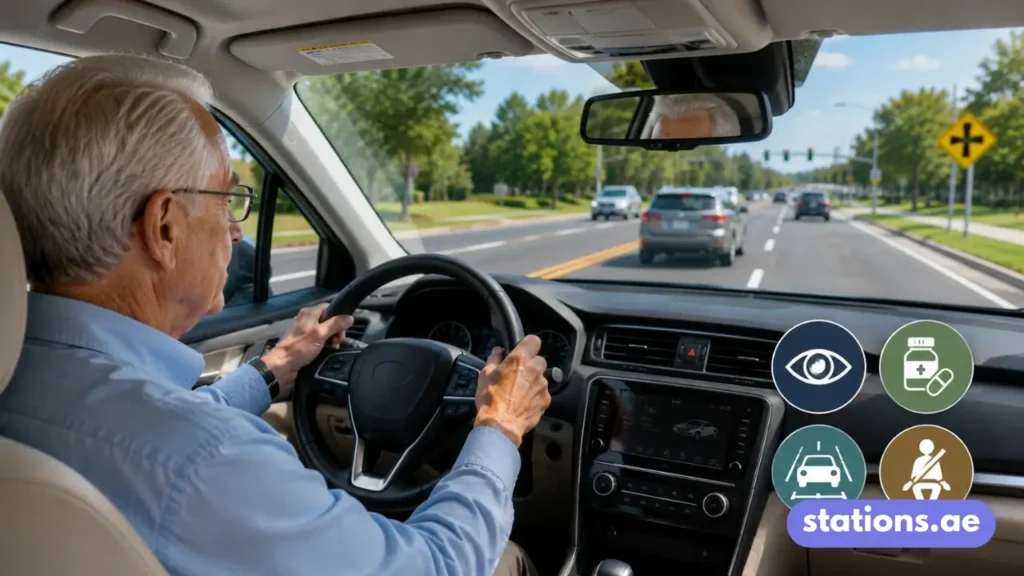
Safe driving depends on more than just renewing your driver’s license. Healthy habits and regular checkups can help seniors stay confident and independent on the road. These simple tips can reduce risks and help you drive safely for longer.
Stay Physically Active
Regular exercise helps improve strength, balance, and flexibility. It can also improve reaction time, making it easier to steer, brake, and check blind spots while driving.
Get Regular Eye Exams
Good vision is essential for safe driving. Have your eyes checked every year or as recommended by your eye doctor. Update your glasses or contact lens prescription if your vision changes.
Review Medications
Some medicines can cause drowsiness, dizziness, blurred vision, or slower reaction times.Talk to your doctor or pharmacist to find out if any of your medications may affect your ability to drive safely.
Avoid Night Driving
Driving at night can be harder because of reduced visibility and glare from headlights. If you have trouble seeing after dark, try to drive during daylight whenever possible.
Drive During Good Weather
Driving becomes more challenging in rain, snow, fog, or icy conditions. If the weather is poor, consider delaying your trip until road conditions improve.
Take Defensive Driving Courses
A defensive driving course can refresh your driving skills and teach the latest traffic laws. Some insurance companies may also offer discounts after you complete an approved course.
Maintain Your Vehicle
Keep your vehicle in good condition by checking the brakes, tires, lights, windshield wipers, and mirrors regularly. A well-maintained vehicle is safer and more reliable on the road.
Tip: If you ever feel less confident behind the wheel, talk with your doctor or schedule a professional driving assessment. Finding problems early can help you stay safe and continue driving for as long as possible.
Best Vehicle Safety Features for Senior Drivers
Modern vehicles include many safety features that can make driving easier and help prevent accidents. While these technologies cannot replace safe driving, they can provide extra support for older drivers. If you are buying a new or used car, look for these important safety features.
Automatic Emergency Braking
Automatic emergency braking can detect a possible collision and apply the brakes if the driver does not react in time. This feature can help reduce the risk of front-end crashes.
Blind-Spot Monitoring
Blind-spot monitoring warns you when another vehicle is beside or just behind your car. It helps make lane changes safer, especially on busy highways.
Lane Departure Warning
Lane departure warning alerts you if your vehicle begins to drift out of its lane without using a turn signal. Some systems also provide gentle steering support to help keep the car in its lane.
Rear-View Camera
A rear-view camera gives you a clear view behind your vehicle when reversing. It can help you avoid hitting people, other vehicles, or objects that may be difficult to see.
Adaptive Cruise Control
Adaptive cruise control automatically adjusts your speed to keep a safe distance from the vehicle ahead. It reduces the need for constant braking and acceleration during long drives.
Parking Assist
Parking assist uses cameras and sensors to help you park safely. Some systems can even steer the vehicle into a parking space while you control the brakes and accelerator.
Large Touchscreens
Large touchscreens with clear menus and easy-to-read text make it simpler to use navigation, phone calls, and other vehicle controls. A user-friendly display helps reduce distractions while driving.
Head-Up Display
A head-up display projects important driving information, such as your speed and navigation directions, onto the windshield. This allows you to keep your eyes on the road instead of looking down at the dashboard.
Tip: When choosing a vehicle, look beyond comfort and style. A car with modern safety features can improve confidence, reduce stress, and help seniors stay safe behind the wheel for many years.
Alternatives if Driving Is No Longer Safe
Stopping driving doesn’t mean losing your independence. Many transportation options can help seniors stay active, attend medical appointments, shop for groceries, and visit family and friends. The best choice depends on where you live and the services available in your area.
Public Transportation
Many cities offer buses, trains, and local transit services that are safe and affordable. Some public transportation systems also provide discounted fares for older adults.
Senior Transportation Services
Many communities have transportation programs designed for seniors. These services often provide rides to medical appointments, grocery stores, pharmacies, and community centers. Some require advance booking, while others offer door-to-door service.
Ride-Sharing Services
Ride-sharing apps such as Uber and Lyft make it easy to travel without driving. Family members can also help schedule rides, making these services a convenient option for seniors who no longer drive.
Family Support
Family members and close friends can help with transportation when needed. A shared schedule for medical appointments, grocery trips, and social activities can help seniors stay active without needing to drive.
Community Programs
Many local organizations, churches, and nonprofit groups offer transportation assistance for older adults. Many community programs provide low-cost or free rides so seniors can remain connected and self-reliant.
Tip: Plan your transportation before you stop driving. Knowing your options in advance can make the transition easier and help you continue enjoying your daily activities with confidence.
Frequently Asked Questions
Do seniors have to renew their driver’s license more often?
It depends on the state. Many states shorten the renewal period once drivers reach a certain age, while others use the same renewal schedule for all drivers.
At what age do seniors need to renew their license?
There is no single age across the United States. Some states begin special renewal rules at 65, while others start at 70, 75, 80, or 85. Check your state’s DMV for the exact age requirements.
Which states require a vision test for senior drivers?
Many states require vision tests for older drivers. Examples include California, Florida, Texas, Arizona, Colorado, Kansas, Virginia, and Massachusetts. The age and testing rules vary by state.
Do seniors have to take a driving test?
Most seniors do not need a road test simply because of their age. However, the DMV may require one if there are concerns about driving ability, medical conditions, or safety.
Can family members report an unsafe driver?
Yes. Many state DMVs allow family members to report a driver they believe may no longer be able to drive safely. The DMV reviews each report before deciding whether further testing is needed.
Can a doctor report an unsafe elderly driver?
Yes. In some states, doctors must report certain medical conditions that may affect safe driving. In many other states, reporting is voluntary and depends on state law.
Conclusion
U.S. driving license rules for seniors are different in every state. Some states require shorter renewal periods, vision tests, or in-person renewals, while others follow the same process for drivers of all ages. Age alone does not take away your driver’s license.
Regular eye exams, good health, and safe driving habits can help you stay on the road longer. Before renewing your license, always check your state’s DMV website for the latest rules and requirements. For more bus and metro timing information, please visit our website.