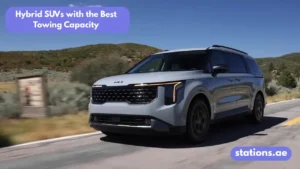
The Ford Everest has become one of the most talked-about SUVs that many Americans have never experienced. This midsize, three-row SUV shares its body-on-frame platform family with the Ford Ranger, giving it rugged engineering, Four Wheel Drive capability, strong towing ability, and diesel power in many markets. Its modern cabin also makes it practical for everyday family driving.
Unlike most family SUVs that use car-based platforms focused on comfort and efficiency, the Everest is built for genuine capability. It offers the strength needed for towing and off-road driving while still providing the space and features expected from a family SUV.
The Everest is sold in Australia, the Middle East, including the UAE, parts of Asia, and Africa. However, it is not currently offered as a regular production model through Ford dealers in the United States.
- What Is the 2025 Ford Everest
- Ford Everest at a Glance
- 2025 Ford Everest Exterior Design
- Ford Everest Platform and Engineering
- 2025 Ford Everest Engine Options
- How Does the Ford Everest Drive
- Ford Everest Off-Road Performance
- Ford Everest Towing Capacity
- 2025 Ford Everest Interior
- Technology and Infotainment
- Safety and Driver Assistance
- Fuel Economy and Running Costs
- 2025 Ford Everest Pricing
- Is the Ford Everest Available in America
- Why Americans Cannot Buy the Ford Everest
- Can You Import a Ford Everest Into the USA
- Ford Everest vs Ford Ranger
- Ford Everest vs Ford Explorer
- Best Ford Everest Trim or Variant
- Is the 2025 Ford Everest Worth It
- Who Should Buy the Ford Everest
- Who Should Skip the Ford Everest
- Ford Everest Alternatives
- 2025 Ford Everest Pros and Cons
- Closing
- Frequently Asked Questions
What Is the 2025 Ford Everest
The 2025 Ford Everest is Ford’s global midsize SUV, positioned below the Ford Explorer in some markets while offering a more rugged construction underneath. Where it is sold, the Everest sits among Ford’s key international SUVs, combining three rows of seating with genuine off-road capability, strong towing potential, and a choice of diesel engines depending on the market.
Built on the Ford Ranger Platform
The Everest has a close relationship with the Ford Ranger, but it is more than simply a pickup with a roof and extra seats. It uses Ford’s T6.2 platform, a ladder frame chassis, much of the Ranger’s front-end structure, and several of its available engines. However, Ford developed a dedicated rear suspension setup, enclosed cargo area, unique rear body structure, and cabin tuning specifically for SUV use.
Designed for Capability and Family Use
This construction makes the Everest appealing to families who need three rows without giving up towing or off-road ability. It also suits drivers who regularly travel on gravel, dirt, or flooded roads. Compared with more car-like midsize SUVs, the Everest may sacrifice some ride comfort and everyday agility, but its body-on-frame design provides the durability and capability that many unibody crossovers cannot match.
Ford Everest at a Glance
Specifications vary by market and trim. The table below reflects commonly quoted figures for the current generation Everest, drawn primarily from the Australian lineup, which offers the widest published detail. Middle Eastern, UAE, and other markets differ in engine choice and equipment, and these differences are called out separately later in this guide.
| Category | Typical Specification (Australia, Trend grade unless noted) |
| Engine options | 2.0-litre twin-turbo diesel four-cylinder; 3.0-litre turbo diesel V6 |
| Transmission | 10-speed automatic |
| Drive system | Rear Wheel Drive or selectable Four Wheel Drive depending on grade |
| Seating capacity | Up to seven, across three rows |
| Braked towing capacity | Up to 3,500 kg (approximately 7,716 lbs), subject to configuration |
| Length | Approximately 4,914 mm (193.4 in) |
| Width | Approximately 2,207 mm (86.8 in) |
| Height | Approximately 1,841 mm (72.4 in) |
| Wheelbase | Approximately 2,900 mm (114.1 in) |
| Curb weight | Approximately 2,383 kg (5,253 lbs) |
| Cargo capacity | 259 liters behind row three, 898 liters with row three folded, 1,823 liters with rows two and three folded |
| Off road features | Selectable drive modes, locking rear differential on relevant grades, low range on Four Wheel Drive versions |
Always confirm current figures against Ford’s official regional website before making a purchase decision, since engine availability and equipment change between markets and model years.
2025 Ford Everest Exterior Design
The 2025 Ford Everest is Ford’s global midsize SUV, positioned below the Ford Explorer in some markets while offering a more rugged construction underneath. Where it is sold, the Everest sits among Ford’s key international SUVs, combining three rows of seating with genuine off-road capability, strong towing potential, and a choice of diesel engines depending on the market.
Built on the Ford Ranger Platform
The Everest has a close relationship with the Ford Ranger, but it is more than simply a pickup with a roof and extra seats. It uses Ford’s T6.2 platform, a ladder frame chassis, much of the Ranger’s front-end structure, and several of its available engines. However, Ford developed a dedicated rear suspension setup, enclosed cargo area, unique rear body structure, and cabin tuning specifically for SUV use.
Designed for Capability and Family Use
This construction makes the Everest appealing to families who need three rows without giving up towing or off-road ability. It also suits drivers who regularly travel on gravel, dirt, or flooded roads. Compared with more car-like midsize SUVs, the Everest may sacrifice some ride comfort and everyday agility, but its body on frame design provides the durability and capability that many unibody crossovers cannot match.
Ford Everest Platform and Engineering
Body-on-Frame Construction
Underneath its body, the Everest uses genuine body-on-frame construction, meaning the cabin and chassis are built as separate structures rather than as one welded unibody shell. This approach is also used by vehicles such as the Ranger, Toyota Fortuner, Isuzu MU-X, and Toyota Land Cruiser Prado. It gives the Everest a strong foundation for towing, rough terrain, and long-term durability.
Built for Towing and Off-Road Driving
The separate frame helps manage twisting forces when driving over uneven terrain and provides a strong mounting point for towing hardware. The trade-off is that the Everest can feel slightly firmer over small bumps than a unibody crossover. Its higher ride height and centre of gravity can also make it feel less agile through corners.
Four Wheel Drive versions add serious off-road hardware, including a two-speed transfer case with low-range gearing, selectable terrain modes, and a locking rear differential on relevant grades. These systems help Everest tackle sand, mud, slippery surfaces, and uneven trails with greater control. Some markets also offer Rear Wheel Drive versions for buyers who want three-row practicality without the added cost and complexity of Four Wheel Drive.
How It Feels on the Road
For everyday driving, the Everest feels stable at highway speeds and confident on rough roads. Its body-on-frame platform also gives it a planted feel when towing, without the excessive movement that can affect softer car-based SUVs. However, a well-tuned unibody SUV will generally feel lighter and more agile around town, making this an important tradeoff for buyers to consider.
2025 Ford Everest Engine Options
Engine availability differs significantly by region, so buyers should always confirm what is offered locally.
2.0 Liter Twin Turbo Diesel, 4 Cylinder
Common in Australia and several Asian markets, this engine produces roughly 207 hp (154 kW) and 369 lb-ft (500 Nm) of torque, paired with a 10-speed automatic. It suits buyers who want strong low-speed torque for towing and light off-roading without stepping up to the larger V6, and it is the standard engine on several mid-range grades.
3.0 Liter Turbo Diesel V6
Offered on higher grades in markets like Australia, this engine steps up to around 247 hp (184 kW) and 443 lb ft (600 Nm) of torque. It suits buyers who tow regularly, drive at higher altitudes, or simply want more relaxed overtaking performance, and it remains paired with the same 10-speed automatic transmission.
2.3 Liter Turbocharged Petrol 4 Cylinder
In several Middle Eastern markets, including parts of the UAE lineup, Ford offers a 2.3-liter turbocharged petrol engine paired with a 10-speed automatic, aimed at buyers in regions where diesel fuel and diesel-specific servicing are less common at the retail level.
2.0 Liter Turbo Diesel With a 6-speed Automatic
This configuration is offered in some Gulf markets, notably Saudi Arabia, as a more affordable diesel option separate from the twin-turbo unit used elsewhere.
No performance version equivalent to the Ranger Raptor currently exists in the Everest lineup, so buyers looking for the twin-turbo petrol V6 used in the Ranger Raptor will not find it under an Everest badge.
How Does the Ford Everest Drive
On the road, the Everest feels composed rather than sporty, which suits its purpose as a capable family and touring SUV. Diesel models deliver strong low-rev torque, making highway overtaking and merging with a loaded trailer easier than in many smaller petrol crossovers. The 10-speed automatic generally shifts smoothly, although it can occasionally search for the right gear on steep or undulating roads.
Comfortable Ride and Controlled Handling
The steering is light at low speeds, making parking and tight manoeuvres easier, before becoming firmer at highway speeds. However, it does not feel as immediate as the steering in a typical car-based SUV. Ride comfort is one of the Everest’s strengths, with its coil-sprung rear suspension helping the vehicle remain composed over broken tarmac and gravel. When unladen, however, the rear can feel slightly firm over sharper bumps.
Quiet Enough for Long Journeys
For a diesel-powered, body-on-frame SUV, cabin noise is well controlled. Some engine clatter is noticeable at idle and under hard acceleration, but it becomes less intrusive once cruising. Comfortable front seats, a relaxed powertrain, and a relatively quiet cabin make the Everest well suited to long highway journeys, particularly in markets such as Australia and the Gulf region.
Capability Over Agility
Compared with a conventional crossover, the Everest gives up some low-speed agility and nimble handling. In return, it offers stronger towing ability, durable body-on-frame construction, and genuine Four Wheel Drive hardware, making it a better fit for drivers who regularly travel long distances or venture beyond paved roads.
Ford Everest Off-Road Performance
Off-road capability is one of Everest’s strongest selling points, but it is important to distinguish its genuine hardware from marketing claims. With the right specification, tyres, and driving technique, the Everest can handle terrain that would quickly challenge a typical family crossover.
Four Wheel Drive and Low Range
Four Wheel Drive versions feature a proper low range transfer case, which increases available torque for steep climbs, controlled descents, and slow technical driving. This gives the Everest a significant advantage over conventional All Wheel Drive systems designed primarily for improving road traction.
Selectable terrain modes can also adjust throttle response, transmission behaviour, and traction control for conditions such as sand, mud and ruts, and slippery surfaces. These settings make it easier to maintain traction when conditions become unpredictable.
Traction and Hill Descent Control
A locking rear differential, available on relevant grades, can help when one rear wheel loses traction on uneven ground, rocks, or deep sand. Hill descent control automatically manages braking on steep downhill sections, allowing the driver to concentrate on steering and vehicle positioning.
Ground Clearance and Tyres
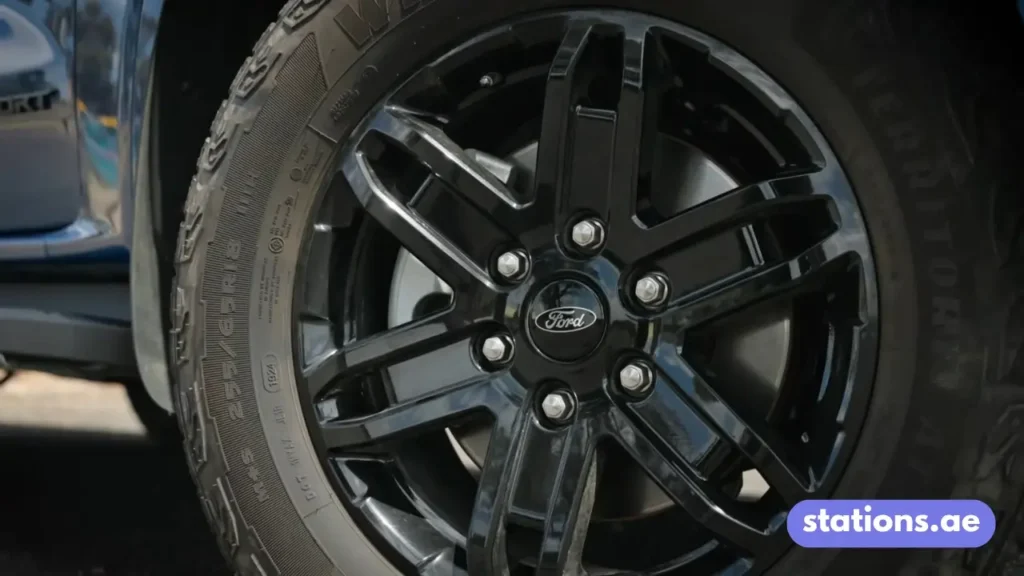
The Everest offers greater ground clearance than most crossover SUVs, while its body-on -frame construction provides a strong foundation for tackling rough terrain. Buyers planning serious off-road or dune driving, particularly in the UAE and wider Gulf region, should verify the latest Ford specifications for ground clearance, wading depth, and approach and departure angles before relying on the vehicle for expedition use.
Tyres are equally important. Standard highway terrain tyres work well for everyday driving, but drivers who regularly tackle sand, mud, or rocky trails may benefit from suitable all terrain tires.
How Capable Is the Everest
The Everest is not an extreme rock crawler, and more specialised off-road vehicles can offer greater wheel articulation and more aggressive gearing. However, it provides genuine and usable off-road capability while retaining the comfort, practicality, and road manners expected from a family SUV.
Ford Everest Towing Capacity
Towing is one of the Everest’s key strengths, particularly for buyers who regularly tow caravans, boats, or utility trailers. Its body-on-frame construction, strong diesel engines in many markets, and dedicated towing technology make it well suited to heavier loads.
Up to 3,500 kg of Braked Towing
Ford Australia lists a maximum braked towing capacity of up to 3,500 kg, or roughly 7,716 lbs, for relevant Everest configurations. However, the exact rating can vary depending on the engine, drivetrain, and trim level. Buyers should confirm the towing capacity for their specific vehicle before planning around the maximum figure.
Towing Capacity Is Not the Whole Story
The maximum trailer weight is only one part of safe towing. Payload includes passengers, luggage, accessories, and towball download, while Gross Combined Mass covers the combined weight of the vehicle, occupants, cargo, and trailer. This means an Everest could technically remain within its maximum towing capacity while exceeding its overall combined weight limit.
Anyone planning to tow close to the maximum rating should therefore check the vehicle’s towing capacity, payload, towball download, and Gross Combined Mass together.
Towing Technology
- Relevant Everest grades include technology designed to make towing more controlled.
- Trailer sway control can apply individual braking inputs to help stabilise a moving trailer, while Tow or Haul mode adjusts transmission behaviour and throttle response for smoother load management.
- Higher grades may also offer an integrated trailer brake controller, reducing the need for an aftermarket unit.
2025 Ford Everest Interior
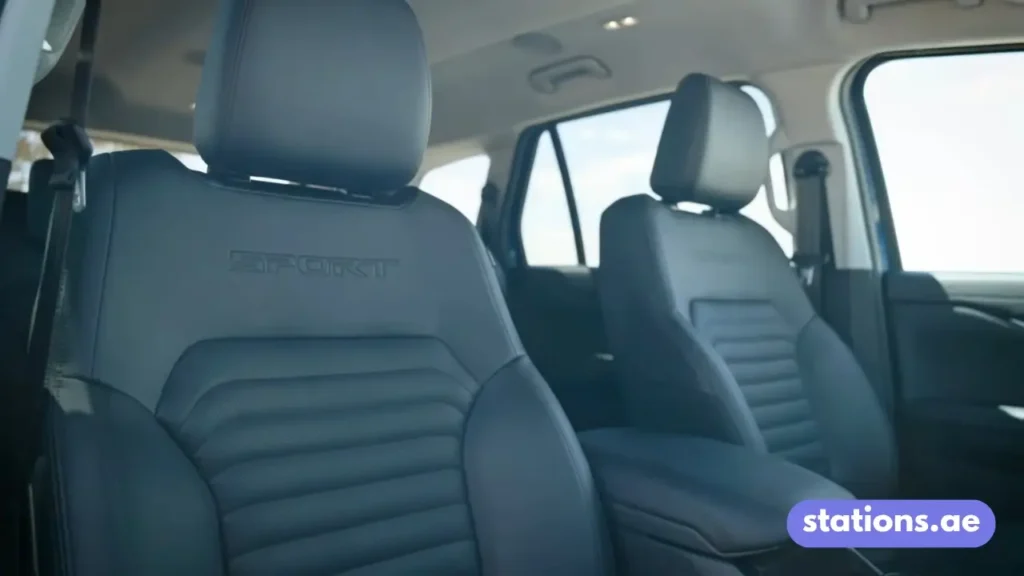
Inside, the Everest borrows heavily from the Ranger’s cabin architecture, which brings both strengths and a few compromises.
The dashboard is dominated by Ford’s large portrait-oriented touchscreen on most grades, sitting above physical climate controls on many trims. Front seats offer good adjustment range and comfortable, supportive cushioning, particularly on higher grades with heated and cooled leather-trimmed seats.
Second row space is genuinely generous, with enough legroom for tall adults on most trips, reclining backrests on many grades, and dedicated air vents and USB charging points. This is where Everest’s size advantage over smaller midsize SUVs becomes obvious.
Can Adults Realistically Use the Third Row
Third row space is best reserved for children or shorter adults on shorter trips. Legroom and headroom back there are tighter than the rest of the cabin; there are typically no dedicated climate controls, and access requires folding and sliding the second row forward. This is a normal limitation shared by nearly every three-row SUV in this size class, not a specific weakness of the Everest, but buyers who genuinely need three rows of adult-sized comfort every day should look at larger, longer SUVs instead.
Cargo space adapts well to different needs. With all three rows in place, there is enough room for everyday shopping and small bags; folding the third row opens up a genuinely useful family-sized boot, and folding both rear rows creates a large, flat load area suitable for larger cargo or camping gear.
Technology and Infotainment
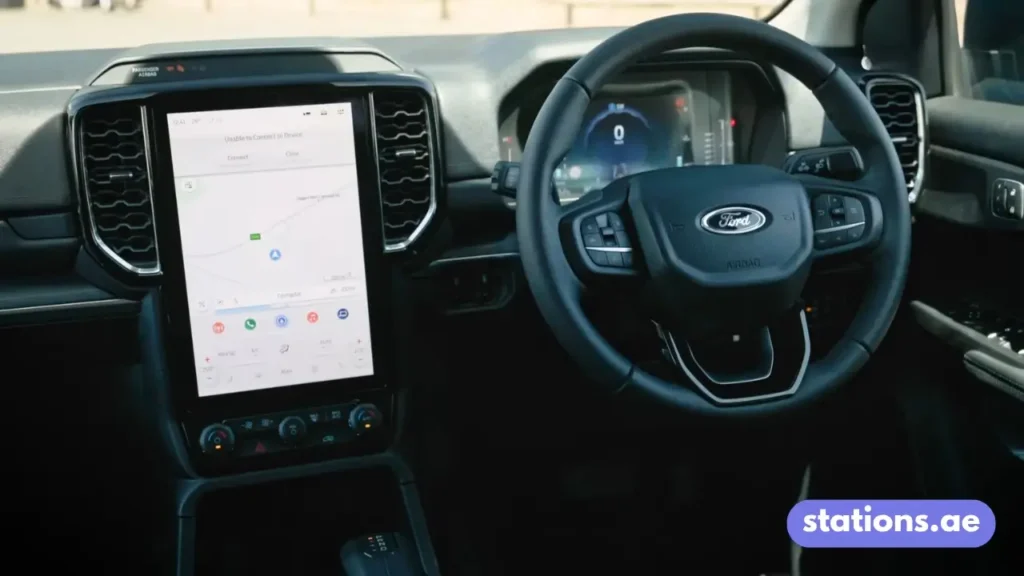
- Large Touchscreen Display: Higher trims offer a responsive portrait display with clear menus, while entry grades use a smaller screen for essential functions and controls.
- Wireless Connectivity Support: Compatible grades support wireless Apple CarPlay and Android Auto, making smartphone access convenient without requiring cables during everyday driving and longer journeys.
- Digital Cabin Technology: Higher trims can include digital instruments, wireless charging, USB ports, and premium audio equipment, depending on market and vehicle specification.
- Market Feature Differences: Equipment varies between regions, so buyers should confirm the exact infotainment features offered on their specific Everest grade before purchase or ordering.
Safety and Driver Assistance
- Advanced Safety Systems: Higher grades can include emergency braking, adaptive cruise control, lane-keeping assistance, blind spot monitoring, and rear cross-traffic alert systems.
- Parking Assistance Features: Available camera systems and parking assistance can make manoeuvring the Everest easier, particularly in crowded urban spaces and tight parking areas.
- Towing Safety Support: Trailer sway control and related assistance can improve stability while towing, but availability depends on the specific grade and market configuration.
- Driver Attention Required: Driver assistance systems support safer driving but cannot replace attention, especially when towing, travelling off-road, or operating a heavy vehicle.
- Official Safety Confirmation: Buyers should verify which safety features are standard or optional because equipment can differ significantly between Everest grades and regional markets.
Fuel Economy and Running Costs
- Engine Choice Matters: Fuel consumption varies according to engine, drivetrain, wheels, driving conditions, payload, and towing, so no single figure applies across every Everest.
- Official Economy Figures: Published diesel consumption figures commonly fall around seven to nine litres per 100 kilometres, although real-world usage can be higher.
- Real World Consumption: Urban traffic, highway speeds, heavy loads, and towing can increase fuel consumption beyond laboratory figures, as expected with most diesel SUVs.
- Diesel Ownership Costs: Running costs include diesel fuel, routine maintenance, and diesel-specific requirements such as particulate filter servicing and exhaust fluid top-ups.
- Regional Fuel Availability: Diesel is widely available in key Everest markets including Australia and Gulf countries, supporting long-distance travel and regular vehicle use.
2025 Ford Everest Pricing
- Australian Pricing Range: Australian pricing begins around AU$60,589 for the entry Ambiente and rises to roughly AU$90,467 for the Platinum grade.
- UAE Pricing Range: UAE pricing generally spans roughly AED 157,000 to more than AED 230,000, depending on grade, engine, and available equipment.
- Regional Specification Differences: UAE models can offer petrol and diesel engines, while Australian versions have a more diesel-focused range, so specifications should be checked locally.
- US Availability Status: The Everest is not officially sold through American Ford dealers, meaning online US dollar prices usually represent conversions or speculative estimates.
Is the Ford Everest Available in America
The direct answer is no! The 2025 Ford Everest is not currently sold as a regular production model through Ford’s dealer network in the United States. While the Everest is available in several international markets, American buyers cannot purchase it as a standard new Ford SUV through US dealerships.
Why the Ranger Connection Matters
The Everest’s close relationship with the Ford Ranger makes its absence from the US market particularly interesting. The Ranger is already sold in America, and the Everest shares much of its underlying engineering, including its ladder frame platform, suspension architecture, and several powertrain components. This connection has naturally fuelled interest among American truck and SUV buyers who would like to see an Everest offered locally.
Why Has Ford Not Launched It
Several possible explanations are discussed by industry observers, although they should not be treated as confirmed reasons from Ford. Potential factors include overlap with Ford’s existing SUV lineup, the cost of adapting the Everest to US-specific safety and emissions requirements, and questions about where it would fit within the company’s current range.
What About a Future US Launch
Everest’s absence does not necessarily mean it will never reach America. However, unless Ford officially announces a US introduction, claims about a future launch should be treated as speculation. For now, buyers should distinguish between confirmed Ford information and industry analysis when evaluating Everest’s potential availability in the United States.
Why Americans Cannot Buy the Ford Everest
The Ford Everest’s absence becomes easier to understand when you compare its role with Ford’s existing American lineup. Several models already cover similar customer needs:
- Ford Explorer: The three-row Explorer already serves American families seeking spacious SUV practicality, creating some overlap with the Everest’s family-oriented, passenger-focused design.
- Ford Bronco: The Bronco covers Ford’s rugged off-road SUV market, offering body-on-frame capability while targeting buyers seeking adventure rather than everyday three-row family practicality.
- Ford Ranger: The Ranger serves American buyers wanting midsize truck capability, while the Everest uses related engineering for an enclosed, passenger-focused SUV body.
- Market Overlap: Introducing the Everest could position it against existing Ford models, potentially creating internal competition instead of filling a clearly underserved segment.
- US Certification Costs: Bringing the Everest to America would require additional safety, emissions, and regulatory certification, adding costs Ford would need to justify commercially.
Can You Import a Ford Everest Into the USA
Seeing a Ford Everest on US roads is possible, but importing one is not the same as buying one through Ford’s American dealer network. Official US sales include manufacturer support, parts availability, warranty coverage, and standard financing, while privately imported vehicles may not.
The 25-Year Rule
US federal regulations generally allow vehicles 25 years old or older to enter without meeting Federal Motor Vehicle Safety Standards. The age is calculated from the vehicle’s month and year of manufacture, not its model year. Because the current-generation Everest is relatively new, it will not qualify for this exemption for decades.
Importing a Newer Everest
A newer Everest may potentially be imported through NHTSA’s Registered Importer programme, but the process can involve compliance modifications, paperwork, and substantial costs. Meeting federal requirements also does not automatically guarantee registration, as individual states can impose additional requirements.
Important! Import rules can change, so buyers should confirm requirements with a Registered Importer, NHTSA, US Customs and Border Protection, and their state motor vehicle authority before importing an Everest.
Ford Everest vs Ford Ranger
| Category | Ford Everest | Ford Ranger |
| Body style | Enclosed SUV | Pickup truck |
| Seating | Up to three rows depending on grade | Cabin seating only, no third row |
| Cargo | Enclosed, weather-protected cargo area | Open pickup bed |
| Towing | Strong towing capability on relevant grades | Strong towing capability on relevant grades |
| Off-road hardware | Highly capable on Four Wheel Drive grades | Highly capable on Four Wheel Drive grades |
| Family use | Strong, built around passenger comfort | More utility focused |
| Daily driving character | SUV focused, weather-sealed cabin | Truck focused, workhorse oriented |
Buyers needing secure, weatherproof passenger space and third-row seating will favour the Everest, while those needing an open cargo bed will prefer the Ranger. Both offer broadly similar towing and off-road capability when equipped with comparable powertrains.
Ford Everest vs Ford Explorer
For American readers, the Ford Explorer is the closest comparison to the Everest because both offer three-row seating and family-friendly SUV practicality. However, they are built for noticeably different purposes.
Platform And Construction
- Everest: Uses a body-on-frame platform related to the Ranger, giving it stronger foundations for towing, rugged terrain, and off-road durability.
- Explorer: Uses a unibody platform designed primarily for ride comfort, everyday handling, and road-focused driving.
This structural difference influences the driving experience, capability, and overall character of both SUVs.
Engine And Powertrain
- Everest: Primarily uses turbo-diesel engines in its main markets, with turbo-petrol options available in selected regions.
- Explorer: Offers turbocharged petrol engines in the US, with hybrid availability on selected versions.
The Everest therefore places greater emphasis on low-end torque and towing, while the Explorer focuses more on smooth everyday performance.
Off-Road Capability
- The Everest has the advantage for serious off-road driving, particularly on four-wheel-drive versions. Its low-range transfer case, body-on-frame construction, and underbody protection make it better suited to demanding terrain.
- The Explorer’s available all-wheel-drive system is better suited to wet roads, snow, and light unpaved surfaces rather than technical off-road driving.
Towing Capability
The Everest generally offers stronger towing credentials, particularly with its diesel and V6 configurations. However, towing limits vary by engine, drivetrain, and market, so specific versions should always be compared directly.
Ride And Daily Comfort
The Explorer is generally the better choice for daily road use. Its unibody construction and suspension tuning deliver a smoother ride, easier handling, and more refined road manners. It also tends to provide stronger noise, vibration, and harshness (NVH) control, making it better suited to long commutes and everyday family driving.
Which One Makes More Sense
- The Explorer is better suited to buyers who prioritise comfort, refinement, and everyday three-row family transportation.
- The Everest is the stronger choice for buyers who want three-row practicality combined with truck-based construction, towing ability, and genuine off-road capability.
Best Ford Everest Trim or Variant
There is no single best Ford Everest variant for every buyer. The ideal choice depends on whether you prioritise affordability, family comfort, off-road capability, towing strength, or premium features. Trim names and equipment vary between markets, but the main differences follow a similar pattern.
Entry-Level Variants
Entry-level grades such as the Ambiente suit buyers who want the Everest’s spacious cabin and three-row practicality without paying for premium features. These versions often focus on essential equipment, everyday usability, and value.
Mid-Range Variants
Variants such as the Trend and Sport provide a strong balance of price, comfort, technology, and capability. They suit families wanting upgraded equipment, a larger touchscreen, and available four-wheel drive without moving to the most expensive grades.
Off-Road Variants
The Tremor targets buyers who regularly travel beyond paved roads. It typically adds upgraded suspension, all-terrain tyres, and additional underbody protection to improve capability on demanding terrain.
Premium Variants
Top-end versions such as the Wildtrak and Platinum focus on luxury, technology, and performance. Depending on the market, they may offer stronger engines, advanced features, and more premium interior finishes.
Which Everest Variant Should You Choose
For value, choose an entry-level grade; for family use, consider a mid-range variant; for off-roading, the Tremor is better suited; and for luxury and performance, the Wildtrak or Platinum is the stronger choice.
Is the 2025 Ford Everest Worth It
The 2025 Ford Everest is a strong all-rounder, combining three-row practicality, towing ability, diesel torque, and genuine off-road capability. However, its strengths come with some trade-offs.
Key Strengths:
- Ranger-based body-on-frame durability
- Practical three-row seating
- Strong diesel torque for towing
- Genuine four-wheel-drive capability
- Competitive technology and touchscreen features
- Versatile for families, towing, and rough roads
Key Limitations:
- Engine and equipment vary by market
- Not officially sold through Ford’s US dealer network
- Ride is less refined than a unibody SUV
- Diesel maintenance requires additional consideration
- Four-wheel-drive models can cost more to run
- Third-row space is better for children and shorter adults
Overall, Everest is worth considering if capability and versatility matter more than maximum road comfort and low running costs.
Who Should Buy the Ford Everest
The Everest particularly suits buyers who regularly need three rows of seating, travel long distances on a routine basis, tow a caravan, boat, or trailer with any regularity, drive frequently on unsealed, rough, or flooded roads, genuinely enjoy off road travel rather than simply wanting the look of it, want a body on frame SUV with proven Ranger based engineering, and need strong everyday family practicality without compromising on towing or rough road capability.
Who Should Skip the Ford Everest
Other SUVs may suit buyers better if they spend almost all their driving time in dense city environments where a smaller footprint and tighter turning circle matter more, prioritize maximum fuel efficiency above all else, prefer the softer, more car like ride of a dedicated unibody crossover, are US based buyers who specifically want official Ford dealer support, standard warranty coverage, and straightforward financing, or simply do not need towing or off road capability and would rather pay for a vehicle without that added mechanical complexity.
Ford Everest Alternatives
The best Ford Everest alternative depends on the market, but several body-on-frame SUVs offer similar combinations of three-row practicality, towing strength, and off-road capability.
Toyota Fortuner
The Toyota Fortuner is one of the Everest’s closest rivals, using a similar body-on-frame design with strong off-road capability and towing credentials in markets where both are available.
Toyota Land Cruiser Prado
The Land Cruiser Prado sits above the Everest in many markets, appealing to buyers who prioritise premium features, stronger off-road credentials, and proven ruggedness despite its higher price.
Isuzu MU-X
The Isuzu MU-X shares its underlying platform with the D-Max pickup and offers a practical body-on-frame SUV formula, often at a more accessible price in shared markets.
Toyota 4Runner
For US buyers, the Toyota 4Runner is one of the closest alternatives, combining body-on-frame construction, three-row availability, towing capability, and genuine off-road hardware.
Other US Alternatives
The Ford Explorer, Ford Bronco, and Jeep Grand Cherokee cover different parts of the Everest’s appeal, but none offer exactly the same combination of three-row practicality and truck-based capability.
2025 Ford Everest Pros and Cons
Pros
- Genuine Ranger-based body-on-frame construction with proven durability
- Strong towing capability on relevant grades, up to roughly 3,500 kg where applicable
- Diesel engines with strong low-speed torque suited to towing and long-distance driving
- Real off-road hardware, including low range and locking rear differential on relevant grades
- Spacious, comfortable second row and a usable, if not class-leading, third row
- Competitive infotainment technology, particularly the larger portrait touchscreen
- Available across a wide range of trims and price points depending on market
Cons
- Not sold through Ford’s US dealer network as a regular production model
- Specifications, engines, and pricing vary significantly by market
- Body-on-frame ride is firmer than a dedicated unibody crossover
- Third row space is limited for full-sized adults on longer trips
- Diesel ownership brings specific maintenance and fuel access considerations
- Higher mechanical complexity than a simpler two-wheel-drive crossover
Closing
The 2025 Ford Everest combines Ranger-based engineering with genuine three-row practicality, towing strength, and off-road capability. That combination makes it a distinctive family SUV and explains its appeal in markets where it is officially sold.
Compared with the Explorer and Bronco, the Everest occupies a middle ground: more capable than a typical road-focused SUV but more family-oriented than a dedicated off-road vehicle. It offers a practical balance of comfort, capability, and versatility.
For buyers in Australia, the UAE, and other supported markets, the Everest is worth considering if towing, off-road performance, and three-row space matter most. For Americans, it remains a vehicle to watch rather than buy through Ford’s US dealer network, unless Ford changes its position.
Frequently Asked Questions
Is the 2025 Ford Everest available in the USA?
No! The 2025 Ford Everest is not currently sold through Ford’s US dealer network.
Why is the Ford Everest not sold in America?
Ford has not confirmed a specific reason, but market overlap with the Explorer and Bronco, plus US certification costs, are commonly cited factors.
Is the Ford Everest based on the Ford Ranger?
Yes! The Everest shares the Ranger’s T6.2 platform and ladder-frame architecture, while using dedicated suspension, body structure, and SUV-specific tuning.
How much can the 2025 Ford Everest tow?
Depending on the configuration, the Everest can tow up to approximately 3,500 kg (7,716 lbs) with braked trailers.
Is the Ford Everest good for off-road driving?
Yes! Four-wheel-drive versions offer low-range gearing, terrain modes, and a locking rear differential on relevant trims, providing genuine off-road capability.