Driving in very high temperatures puts constant stress on your car battery. Many drivers think only the engine suffers in summer, but heat slowly weakens battery performance every day.
Hot weather speeds up the chemical activity inside the battery. This causes fluid to evaporate faster and internal parts to wear out sooner. Even a healthy battery can lose capacity with daily exposure to heat.
Most failures do not happen suddenly. Damage builds up over time until the battery can no longer hold enough charge to reliably start the car.
Knowing how heat affects your battery helps you act early. Regular checks and proper care can prevent breakdowns and keep your car running smoothly at extreme temperatures.
- How Extreme Heat Affects Your Car’s Electrical System
- Why Car Batteries Fail Faster in Extreme Abu Dhabi Heat
- Early Warning Signs Your Battery Is Overheating
- When to Consider Replacing Your Car Battery
- Preventive Tips to Protect Your Car Battery in Abu Dhabi Heat
- Why Local Expertise Matters
- Conclusion
How Extreme Heat Affects Your Car’s Electrical System
In Abu Dhabi, extreme heat puts stress on the battery and the entire electrical system. Lights, air conditioning, and other electronics have to work harder, which increases the load on the battery.
You may notice slow engine starts, flickering lights, or weaker air conditioning. Over time, constant heat and heavy traffic can reduce battery efficiency and affect components like the alternator.
Regular checks and simple preventive steps help keep your battery and electrical system reliable in hot weather.
Why Car Batteries Fail Faster in Extreme Abu Dhabi Heat
Extreme heat puts continuous pressure on car batteries. High temperatures accelerate internal chemical reactions, which slowly degrade battery components and reduce their ability to hold a charge. This process happens every day during hot weather, even when the vehicle is not in use.
Over time, heat exposure weakens the battery’s internal structure. What seems like a sudden failure is usually the result of long-term damage from constant-temperature stress.
Constant High Temperature Exposure
Car batteries in hot climates rarely have a chance to cool down fully. Vehicles parked outdoors or driven daily remain exposed to intense heat for long periods. This continuous exposure accelerates fluid loss and internal wear.
As heat builds up under the hood, battery materials expand and degrade faster. With repeated exposure, the battery gradually loses efficiency and struggles to deliver reliable power.
Heavy Electrical Load in Hot Weather
Hot weather increases the use of air conditioning and cooling systems. These features place additional strain on the battery and charging system, especially during long drives or during traffic congestion.
When the battery works harder for extended periods, internal stress increases. Over time, this added load weakens performance and shortens overall battery life.
Electrolyte Fluid Evaporation
Extreme heat causes battery fluid to evaporate more quickly than usual. This fluid is essential for maintaining proper chemical balance inside the battery and keeping internal components stable.
As fluid levels drop, the battery’s performance declines. Over time, this leads to reduced charge capacity and a higher risk of sudden failure.
Faster Internal Corrosion
High temperatures accelerate battery corrosion. Metal components wear down more quickly when exposed to constant heat and chemical reactions.
Corrosion reduces electrical flow and weakens performance. As it builds up, the battery struggles to deliver enough power to start the engine reliably.
Increased Self-Discharge Rate
Heat naturally increases the rate at which a battery loses stored energy. Even when the car is parked, the battery drains faster in hot conditions.
If the vehicle sits unused for several days, the charge level can drop significantly. This makes starting problems more likely, especially in older batteries.
Under-Hood Heat Buildup
The temperature inside the engine compartment is much higher than the outside air. After driving, heat remains trapped under the hood, continuing to affect the battery.
Repeated heat buildup weakens internal battery materials. Over time, this constant stress shortens battery lifespan and reduces reliability.
Early Warning Signs Your Battery Is Overheating
Heat damage usually builds up slowly before the battery finally fails. Recognizing early warning signs can help you avoid sudden breakdowns, especially in high-temperature areas like Abu Dhabi, where batteries are constantly under heat stress.
Pay attention to small changes in performance. These signals often appear days or weeks before complete failure.
Watch for these warning signs:
- Sluggish or delayed engine start
- Dashboard battery warning light
- Electrical features are working irregularly
- Battery swelling or unusual shape
- Burning smell from the engine area
- White or powdery corrosion on terminals
- Frequent need for jump starts
Never ignore these symptoms. A heat-damaged battery can suddenly stop working, often without further warning.
When to Consider Replacing Your Car Battery
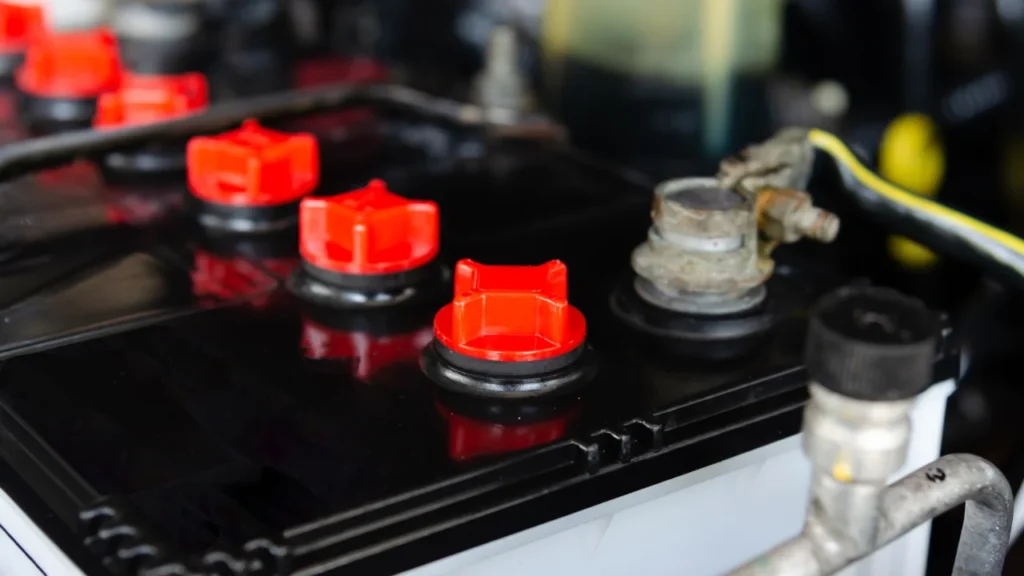
Knowing when to replace your battery can prevent sudden breakdowns, especially in Abu Dhabi’s extreme heat. Regular checks and timely replacement keep your car running reliably.
Signs it’s time to replace your battery:
- Engine starts slowly or struggles to crank.
- Battery is more than 2–3 years old in hot climates.
- Frequent jump starts are needed.
- Visible corrosion on terminals or battery casing.
- Swelling or leakage of battery fluid.
- Electrical systems act irregularly (lights dim, AC weak).
- A dashboard warning light indicates battery or charging issues.
Replacing your battery at the right time ensures safety and avoids unexpected failures during peak summer heat.
Preventive Tips to Protect Your Car Battery in Abu Dhabi Heat
Hot weather in Abu Dhabi can quickly damage car batteries. Doing a few easy things can keep your battery strong and avoid sudden problems.
- Park in the shade to keep the battery cooler.
- Avoid long idling to reduce heat inside the engine.
- Drive regularly to keep the battery fully charged.
- Check fluid levels and refill if needed.
- Clean terminals to prevent corrosion.
- Get a battery check before summer starts.
- Replace old batteries on time to stay safe.
These small steps help your battery last longer and work reliably in extreme heat.
Why Local Expertise Matters
Car batteries behave differently depending on the climate, how you drive, and how you use your vehicle. In hot places like Abu Dhabi, local knowledge makes a big difference in keeping your battery healthy.
Car Battery Replacement Abu Dhabi understands the extreme heat and desert conditions. They provide the right battery for local temperatures, quick on-site replacement, and regular maintenance to make sure your battery lasts longer and works reliably.
Conclusion
Extreme heat in Abu Dhabi can damage car batteries faster than most drivers realize. High temperatures, heavy AC use, and sun exposure all reduce battery life.
Regular checks, preventive maintenance, and timely replacement are key to keeping your battery reliable. Simple steps like parking in shade, cleaning terminals, and monitoring fluid levels can make a big difference.
Working with local experts like car battery replacement Abu Dhabi, ensures your battery is suited for desert conditions. Proper care helps avoid sudden failures and keeps your car running smoothly year-round.